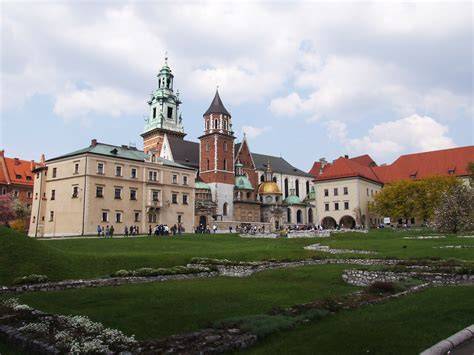
We wish all of our visitors a very merry Christmas and a happy and healthy New Year! During this unique show, we will take you on a fascinating journey through the most important themes of Wawel's history - from the royal tapestries of Sigismund Augustus, through the Armoury and the Crown Treasury, to the mysterious Underground Wawel and the golden age of the Jagiellonian dynasty.
The monumental arcades of the Castle courtyard will become a canvas for modern multimedia projections, which will give these well-known spaces a whole new dimension.
Historický výskum a expozície na Waweli
The Lost Wawel exhibition in its present form opened in 1975. Building upon earlier expositions dedicated to the history of Wawel Hill and centered on the remains of the Rotunda of Sts. Felix and Adauctus (alternately, Rotunda of the Blessed Virgin Mary) from the late 10th/early 11th century, the exhibition also encompasses the former royal kitchens and coach house. This unique exhibition combines an archaeological-archite ctural reserve, architectural elements from various periods, traditionally displayed objects uncovered in archaeological excavations, and scale models of buildings.
The 16th-17th century tiles in the collection come from ceramic heating stoves once found in the royal castle. It is the most valuable ensemble of its kind in Poland. The tiles are beautifully decorated with figural elements, vegetal and animal motifs, and coats of arms. Architectural details from the Arcaded Courtyard, which was restored by Zygmunt Hendel in 1905-1914. The Wawel lapidarium is a collection of stone sculptures and architectural details r ecovered over the past 100 years in the course of restoration work and archaeological excavations.
All of the objects relate to the Wawel and were removed from their original locations at different times and in varying circumstances. A selection of the finest stonework is on view in several dedicated rooms. The sculptures and carved stone elements presented are not only parts of an architectural ensemble. They are a tangible manifestation of the fate and transformation of the historic buildings on Wawel Hill. The objects are arranged in thematic groups: architectural elem ents from the Arcaded Courtyard; fragments of stonework from the façade of the royal palace and pieces uncovered in archaeological excavations conducted on the lower terrace of the royal gardens; and sculpture and stonework from the Wawel Cathedral.
Katedrála a jej bohatstvo
The Cathedral’s Sigismund Chapel is one of the finest examples of Italian Renaissance architecture north of the Alps, but can only be viewed through a bronze grille. Stonework from the Wawel Cathedral includes a Renaissance altar ensemble from 1521, carved by stonecutters from the workshop responsible the Sigismund Chapel; a tympanum from the tomb (1613-1615) of Piotr Tylicki, bishop of Krakow; and a 1558 marble sculpture of St. Exhibition of plaster casts of the carved decoration of the Sigismund Chapel. The oldest were cast in 1868-1874, from molds made by the Krakow sculptor Parys Filippi.
Rotunda of Sts. Rotunda of Sts. Felix and Adauctus Archaeological-architectural reserve around the Rotunda of Sts. Felix and Adauctus (or Rotunda of the Blessed Virgin Mary), 10th/11th century. This is the most important architectural site within the reserve. It was excavated and reconstructed in 1917-1918. The cylindrical rotunda with four apses is built directly on limestone bedrock. In addition, on the south side there is a circular annex connected to the main structure by a passageway. The building is constructed of irregular sandstone plate bound with lime mortar. The extant walls of the structure are 3 to 7 meters high (southeast apse).
Objekty a rekonštrukcie na Waweli
Royal Coach House Objects discovered in archaeological excavations on Wawel Hill are displayed in the chambers of the former coach house. Material traces of everyday life in the Middle Ages, such as shoes, buckles, pots, and tools among others, are grouped together by their constituent materials. Plaster casts and architectural details which correspond to models of medieval buildings provide context. One of the most intriguing objects on view is a tomb slab carved with an image of the Tree of Life.
Small Kitchen Parts of the 16th-century royal kitchens are preserved in this chamber: foundations of the pillars that supported stove hoods, remnants of ovens, and the original ceramic tile floor. Late medieval ceramics, such as kitchen vessels, tableware, floor and stove tiles, are displayed in glass cases.
Katedrála a prehliadka múzea
Katedrála is still an active church, so the visit to the Cathedral Museum should be planned with approximately 90 minutes in mind. Zvonku pôsobí katedrála prevažne goticky, ale vnútri sa v nej prelínajú gotický, renesančný a pôsobivý barokový štýl. Nemusíte poznať poľskú históriu do detailov. Výstup preto nie je vhodný pre cestovateľov s obmedzenou pohyblivosťou.
Katedrálne múzeum vystavuje liturgické predmety, kráľovské insígnie a artefakty spojené s korunováciami. Ak vás takéto zbierky príliš nelákajú, nemusíte mať výčitky svedomia, ak múzeum vynecháte. Prvá kráľovská korunovácia sa v katedrále uskutočnila v roku 1320, keď tu nastúpil na trón Vladislav I. Lokýtek. Posledná korunovácia na Waweli sa konala v roku 1734, keď tam boli korunovaní August III. Okrem korunovácií sa v katedrále konali aj kráľovské svadby, krsty a pohreby.
Cena zahŕňa vstup do katedrály, kráľovských hrobiek, k Zigmundovho zvonu, do Katedrálneho múzea a Arcidiecézneho múzea. Lístok si môžete zakúpiť aj online prostredníctvom oficiálnej webovej stránky. Online rezervácia nie je povinná. Katedrálne múzeum je zatvorené v nedeľu a počas sviatkov. Katedrála je stále aktívnym kostolom, preto sa otváracie hodiny môžu zmeniť v dôsledku bohoslužieb alebo významných udalostí. Vo vnútri nie je povolené fotografovať, s výnimkou priestoru okolo Zikmundovho zvonu.
Lepšie zdokumentovaná je následná románska bazilika, postavená na prelome 11. a 12. storočia a vysvätená v roku 1142. Po požiari v roku 1305 sa začala výstavba súčasnej gotickej katedrály. Presbytérium bolo postavené v rokoch 1320 až 1346, hlavná loď a bočné lode nasledovali do roku 1364. Neskôr boli pristavené renesančné kaplnky a interiér prešiel významnou prestavbou v barokovom štýle. Cesta pešo z hlavného námestia Rynek Główny k katedrále trvá približne 10 minút. Najpríjemnejšia trasa vedie ulicami Grodzka a Kanonicza. Oblasť medzi Wawelom a Hlavným námestím je ideálna, ak chcete väčšinu pamiatok preskúmať pešo.