Vysoké Mýto je domovom jednej z najvýznamnejších továrenských lokalít v strednej Európe, kde Iveco Bus vyvíja, vyrába a inovuje autobusy už viac než storočie. V tejto oblasti sa prelínajú historické kroky s modernými technológiami a výskumom, čo z nej robí kľúčový bod na mape celoživotného vývoja mestského, regionálneho a medzinárodného dopravy.
Historický pôvod a dlhá cesta k dnešnej pozícii lídra
OriginsIt was Josef Sodomka, artisan and entrepreneur, who marked the beginning of the plant’s history when he started his business in Vysoké Mýto in 1895. Over the years, the visionary Czech entrepreneur’s company has become one of the main bus manufacturing hubs and has significantly impacted the country’s economic history through the various brands that have emerged, right up to IVECO BUS.
· 1895: Wheelwright Josef Sodomka moved to Vysoké Mýto, where he founded a wheelwright's workshop and gradually transitioned from carriage production to automobile manufacturing. · 1925: The beginning of custom car production. Cars became the focus of Sodomka's factory, which was managed by Josef Sodomka Sr.; however, his son emerged as the leading figure. · In 1948: the factory of Josef Sodomka was nationalized was nationalized and became a state-owned enterprise, renamed Karosa. The production of buses was concentrated in Vysoké Mýto. · In 1952, Karosa started to cooperate with the national bus chassis manufacturer LIAZ. · From 1962, Karosa was the sole manufacturer of special vehicles in Czechoslovakia. · 1993: In the context of privatization, Karosa was established and an industrial cooperation agreement was signed with RENAULT V.I., under which it acquired 34% of the newly created joint-stock company. The RENAULT V.I.-Karosa alliance became an example of Western involvement in industrial vehicles in the Czech Republic. · 1999: Karosa and Renault V.I. vytvorili joint venture IRISBUS Holding SL, which acquired 94% of Karosa’s shares. By merging their operations, IVECO and RENAULT V.I. created the second largest producer of coaches and buses in Europe. · 2003: IRISBUS became fully owned by IVECO. · 2007: Change of company name to Iveco Czech Republic, a. s. · 2013: IVECO BUS, which replaced the IVECO-IRISBUS name, became the new brand dedicated to passenger transport, marking the start of a new phase of development in IVECO's other international activities.
Vysoké Mýto ako hlavné výrobné centrum Iveco Bus
Vysoké Mýto: Europe's largest bus manufacturerWith a total surface area of 355,000 m2 and an annual production capacity of up to 5,000 vehicles, Vysoké Mýto, IVECO BUS’s main plant in the Czech Republic, is also one of the major bus production facilities in Europe.IVECO BUS plays a key role in the Czech economy, significantly contributing to its growth: its Vysoké Mýto plant employs more than 4,400 people. In 2024, 90% of buses produced were exported to 25 countries, primarily in Europe, as well as Asia and Africa. With a 42% market share, IVECO BUS is the market leader in the Czech Republic.
The Vysoké Mýto facility manufactures the CROSSWAY, the most successful IVECO BUS range, which was developed at the Czech factory. It also produces the EVADYS coach, designed to serve on regional or national routes, shuttle services, or medium-distance tourist missions. The OriginsIt was Josef Sodomka, artisan and entrepreneur, who marked the beginning of the plant’s history when he started his business in Vysoké Mýto in 1895.
Významné milníky a modernizácie
1958: New body assembly process The new process split the body into two sections, upper and lower, which were assembled separately in welding jigs. The complete underbody skeleton was attached to the already plated upper part of the body at the following workstation. The assembled skeleton was placed on the chassis by a lifting crane and continued down the assembly line. The introduction of new pneumatic clamping jigs and the use of the lifting crane significantly accelerated production and improved the overall quality of the vehicles.
1970: New expansions A new body and assembly workshop was built, providing 20,000 m² of production space and 10,000 m² of auxiliary areas. The factory then adopted a modular panel design, transforming the manufacturing process and marking a significant shift from traditional bodywork methods.
1981: Advanced automation and operational centralizationTo enhance its production capabilities, the factory adopted digitally controlled tools and robotic stations. Additionally, an eleven-story administrative building was constructed to centralize management activities.
2001: The first bus manufacturing plant in Eastern Europe with cathodic dip coatingThe factory introduced a cathodic dip coating installation for corrosion protection, ensuring unprecedented longevity for the manufactured vehicles. It is one of the largest of its kind in Europe and can treat vehicles up to 15 meters long.
2002: a new assembly line with an area of 10,000 m² was commissioned to increase daily production capacity. 2003: The integration of adhesive bonding for windows and side panels improved both the aesthetics and quality of the finished products. 2015: A new Design CenterA unique new space was inaugurated to enable customers to configure their vehicles according to their specific needs. Like a physical catalog, it allows them to visualize, touch and test materials, facilitating the selection of the best options from the many possible combinations, such as seats, upholstery and more.
Electromobility a budúcnosť mestskej a regionálnej dopravy
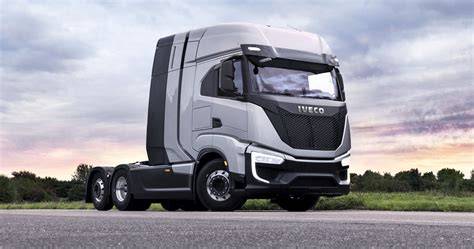
2023: Introduction of ElectromobilityIn addition to the low-emission Compressed Natural Gas (CNG) and hybrid versions, the plant has integrated the CROSSWAY Low Entry ELEC model into its production lines, followed in 2025 by the CROSSWAY ELEC - confirming IVECO BUS’s commitment to providing a diverse range of alternative energy solutions to meet the demands of sustainable mobility.
Modelová náväznosť a ikonické rady
Overview of Iconic ModelsThis commemoration of the 130th anniversary also provides an opportunity to highlight some of the legendary models born in the Vysoké Mýto factory, which have played a crucial role in the evolution of public transport over the decades.1928: The first bus rolled off the factory’s assembly line. It was a vehicle for 14 seated passengers built on the Škoda 125 chassis. Between 1928 and 1939, Body production primarily focused on Škoda, Tatra, Walter, and Praga chassis. Initially, only unique pieces were built, with small series introduced later, mainly in response to state orders. In addition to line coaches, long-distance models with luxurious features also appeared, such as the Škoda 606 DN in 1938 and the Tatra 24/58 in 1939.
From 1940: Various body variants were developed on the Škoda 706 chassis.During World War II: Production of the Škoda 706 NG with a wood gas generator. Between 1954 and 1957, the Karosa T 500 HB, featuring three axles and a rear-mounted Tatra engine in a self-supporting structure, was introduced. Its unique design influenced bus development for decades to come.Between 1958 and 1971: The Škoda 706 RO model evolved into the legendary Škoda 706 RTO. 14,969 units were produced for urban, interurban, and long-distance transport.From 1965: The Š 11 range was progressively developed at Karosa. Thanks to its six main prefabricated panels, the Š 11 model became an international market leader with 26,769 units produced.1981: The 700 range replaced the famous "ŠM" models. The major innovation was the relocation of the LIAZ ML 635 engine and Praga transmission behind the rear axle. Urban, interurban, long-distance, suburban variants with mechanical transmission, and articulated buses were manufactured until 1999.
2006: Launch of the CROSSWAY, designed for urban (with the Low Entry version introduced in 2007) and interurban transport. It was available with alternative energies such as battery electricity, biomethane, XTL fuel, and B100. Its reliability and versatility made it the interurban leader in Europe, with over 65,000 units produced. One out of every two interurban buses sold in Europe is a CROSSWAY. CROSSWAY models have received numerous prestigious awards, including four "Sustainable Bus of the Year" titles: in 2018 with the Low Entry GNV model, in 2020 with the CROSSWAY GNV model, in 2023 with the CROSSWAY Low Entry GNV Hybrid compatible with biogas, and in 2024 with the electric CROSSWAY Low Entry ELEC model.
Since 2022: Vysoké Mýto has been the exclusive production site for the EVADYS. Iveco Bus has inaugurated today, 27th May, a new Prototype and Testing Center in Vysoké Mýto, Czech Republic. The facility will become fully operational in June 2025 and is intended to support the development and validation of vehicles powered by all energy types, including conventional and alternative propulsion systems. The project required an investment of 16 million euros, fully funded by Iveco Bus according to statements, and was completed in 18 months. The center covers a surface area of over 4,000 square meters and includes a thermal chamber capable of reaching +50°C. The facility employs 54 professionals, including 20 engineers. The new center is located within the Vysoké Mýto industrial site, which remains the largest bus manufacturing plant in Europe. In 2024, the plant produced around 5,000 vehicles. The production mix was composed of 92 percent Crossway models-57 percent Normal Floor and 43 percent Low Entry-and 8 percent Evadys. In terms of powertrains, 70 percent of the buses were equipped with diesel engines, 25 percent with compressed natural gas systems including mild hybrids, and 5 percent with battery-electric drivetrains.
Otázky a spolupráca s podnikom
Tata Motors sa zaväzala, že nadále bude udržovať značku Iveco Bus i ochranné známky, vizuálnu identitu a firemnú kultúru spoločnosti Iveco. Sídlem skupiny zostane Turín. IVECO BUS marked the 130th anniversary of the foundation of the Vysoké Mýto plant, in the Czech Republic. Since its inception, the factory has played a key role in the evolution of public transport, both nationally and internationally. This remarkable success is the result of constant evolution, the unwavering commitment of its employees, and the strong relationships established with its business partners.